AA-经济:Frozen世界的经济如何运作(Frozen Findings: Arendelle’s Economy)
来源:tumblr 博客 @arendelle-archives(Frozen Findings 系列),2026-08-26 收录整理。原文:链接。图片按原文位置存放于 assets。
How does the economy work in the world of Frozen? What kind of coins or bills do they use in the monetary system? I remember Kristoff paying with coins in Frozen when he met Anna, but what kind of currency was it and what was its value?
Frozen Findings: Arendelle’s Economy 🪙💶💰
Appreciate the question, Anon!
While the Frozen movies do not show much about Arendelle’s economy, the books, comics, and supplementary materials provide many details about trade, currency, businesses, and everyday life in the kingdom.
Although the franchise does not provide a complete economic system, these scattered details allow us to explore how Arendelle operates.
Payment Methods
Coins and Banknotes
Arendelle uses physical currency, including both coins and banknotes. For example, Frozen II features coins bearing Elsa’s profile.

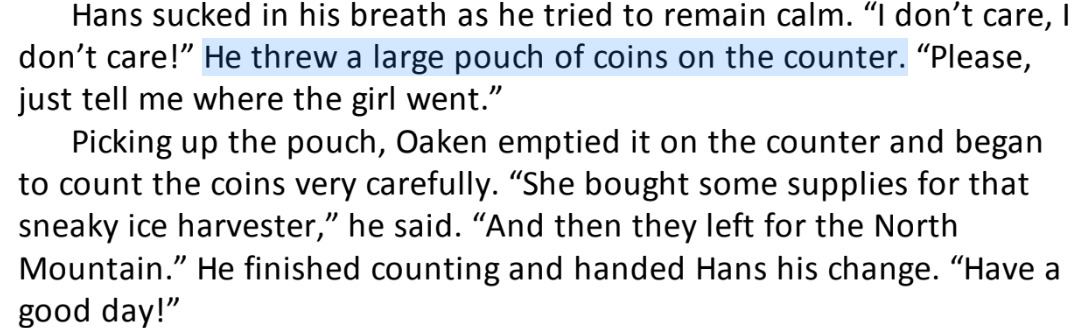
In A Frozen Heart, Hans brings a large amount of coins and gives them to Oaken in exchange for information about Anna’s whereabouts.
Similarly, in All Is Found #1: Anna of Arendelle and the Silver Skates, Anna has a lot of coins in her pocket when she sneaks out of the castle to attend the ice skating competition. She then uses the coins to pay the entry fee for the competition.


While banknotes appear in the Dark Horse comic Breaking Boundaries.
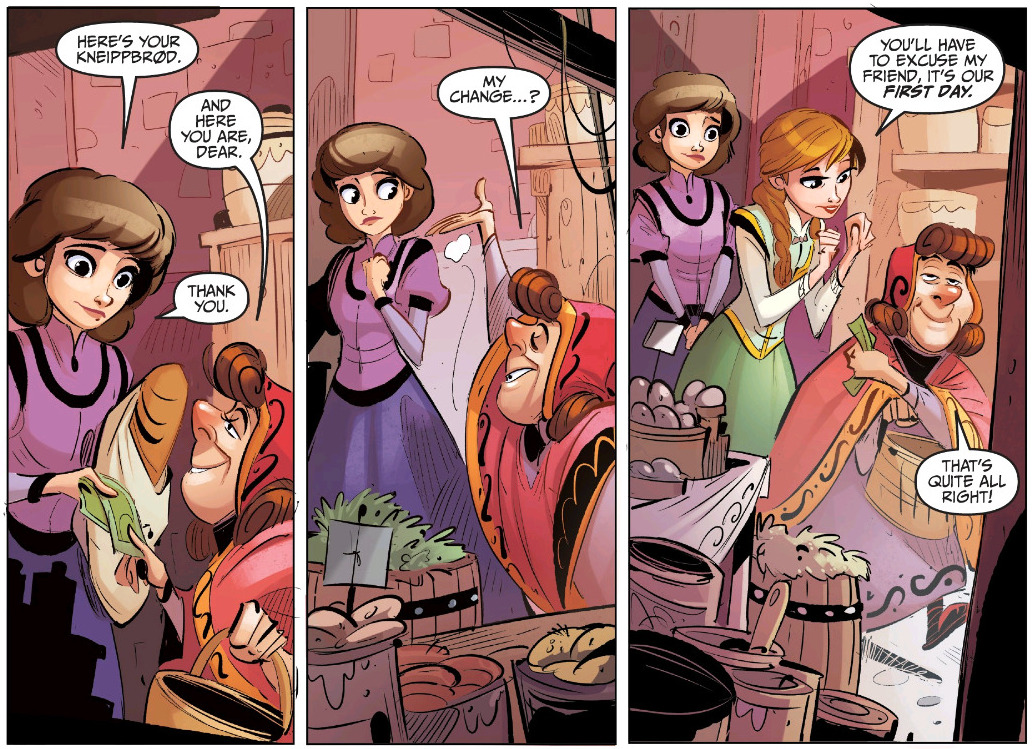
However, money is not the only way people trade. The books also shows examples of bartering and payment in kind, suggesting that traditional exchange methods still exist alongside the use of currency.
Bartering
We can see this in Conceal, Don’t Feel, where Anna regularly trades goods with the grocer Goran while living in Harmon.


Another example appears in The Fixer Upper. Since Bulda and Cliff are trolls and do not use money, Kristoff usually trades fresh mushrooms for his clothes.

Payment in Kind
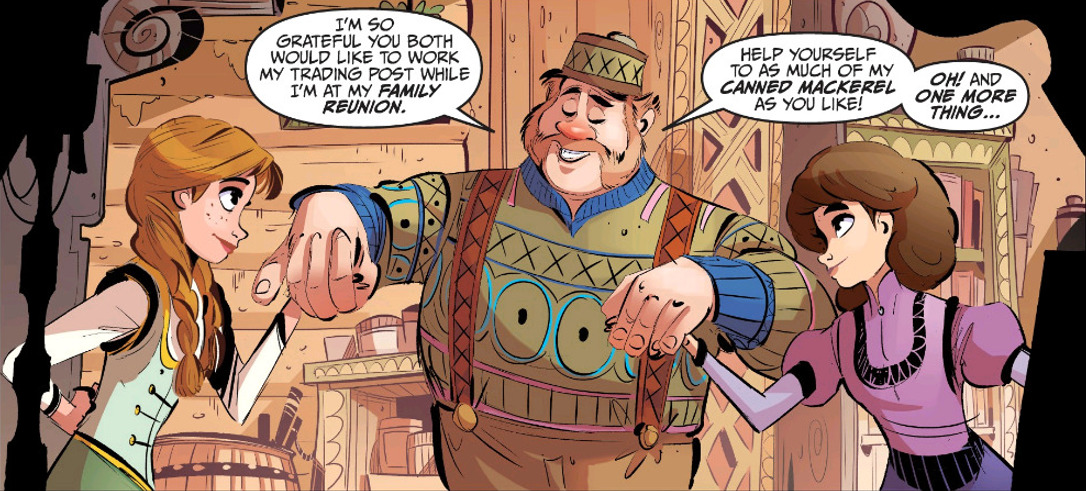
Sometimes payment is also made in kind. For example in the Dark Horse comic Breaking Boundaries, Anna and Princess Mari help Oaken run his shop, and instead of receiving money, they are given food.
Currency Units
Although we can confirm that Arendelle uses coins and banknotes, the franchise never officially reveals the name of its currency or the exact denominations used in the kingdom.
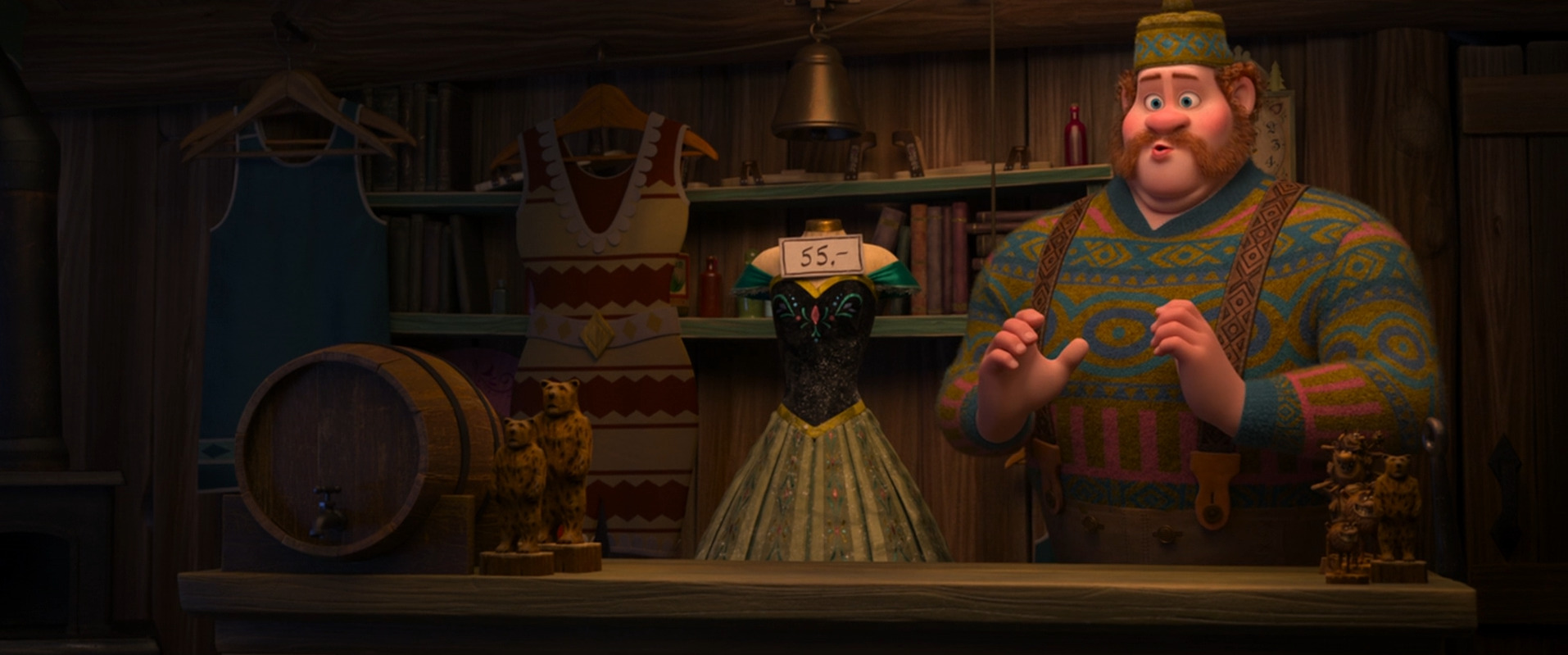
One of the few clues comes from Once Upon a Snowman, where Wandering Oaken Trading Post sells Anna’s coronation outfit for 55,-. The way the price is written resembles Scandinavian currency notation, where a number followed by ”,-” is commonly used to indicate a whole currency amount.
Other than that, the franchise only occasionally mentions numbers without specifying the currency. For example, in Frozen, we hear:
“That’ll be forty.” “Forty? No, ten.”
Various books also refer to “coins” or “money”, but never identify the actual currency units used in Arendelle.
As for the currency itself, modern Norway uses kroner (krone) and øre (1 krone = 100 øre). Since the price tag in Once Upon a Snowman is written as 55,-, it appears Disney intended it to represent 55 kroner, as the ”,-” notation is commonly used with the Norwegian krone.
Notably, the song “Hygge” in Frozen: The Musical also mentions the word “kroner.”
If we all die… keep this stuff as a loaner If we survive… you owe ten thousand kroner
We also have concept art of Arendelle’s coins.
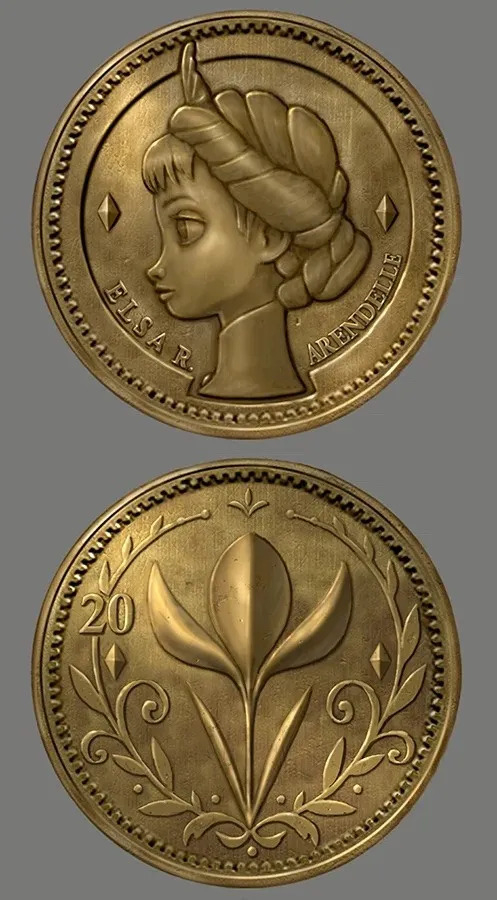
However, based on Norwegian history, the currency used around 1843 would not have been kroner and øre. At that time, Norway’s official currency was speciedaler and skilling. The krone and øre were only introduced later, in 1875, when Norway adopted the Scandinavian Monetary Union.
Also based on the concept art above, we can see what appears to be a 20-unit coin. However, according to historical currency records, there was no 20 skilling or speciedaler coin, while a 20 kroner coin did exist (and is still in use today).
Hence, we came up with a fan theory: Arendelle has its own currency that is only used within Arendelle. If we want to match it with real-world history, I would say Disney probably assumed it was kroner (like in modern-day Norway), but that doesn’t fit the actual historical timeline.
Everyday Economy
The franchise shows that citizens in Arendelle participate in various forms of economic activity, including earning income, acquiring goods and services, managing ownership, and supporting local businesses.
Rental and Ownership
Citizens in Arendelle can access goods and property through different financial arrangements, including renting, purchasing, and paying over time.
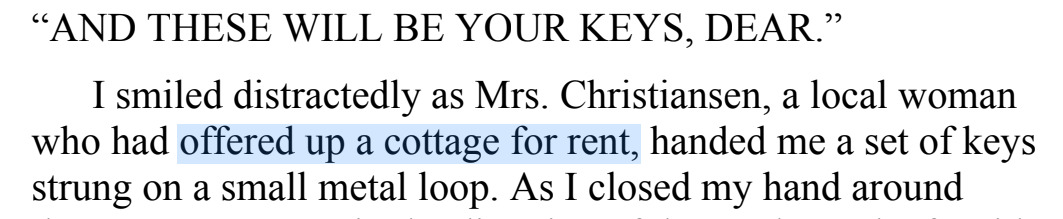
In Dangerous Secrets, Iduna rents a cottage after earning money by providing technical advice and blueprints to farmers. This shows that housing can be a regular expense and that citizens are responsible for managing their own living costs.
Additionally, the Dark Horse comic Breaking Boundaries mentions that sleds can also be rented.
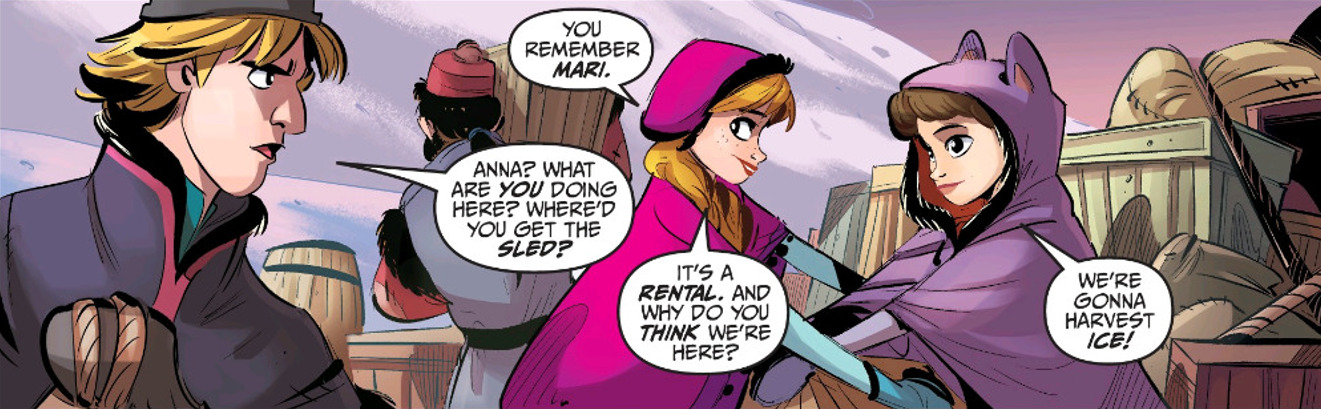
The franchise also shows that citizens in Arendelle can own personal goods through different payment arrangements. Kristoff’s sled is one example of this. In Frozen and A Frozen Heart, he mentions that he has “just paid it off”, suggesting that larger purchases could be paid through instalments rather than being paid for all at once.

Meanwhile, in Frozen: The Junior Novelization, Kristoff mentions that he has “just got it”, further indicating that the sled was a recent purchase.

Income and Work
The franchise provides many examples of how citizens earn a living and operate businesses. Beyond simply selling goods and services, merchants also use different methods to manage, promote, and grow their businesses.
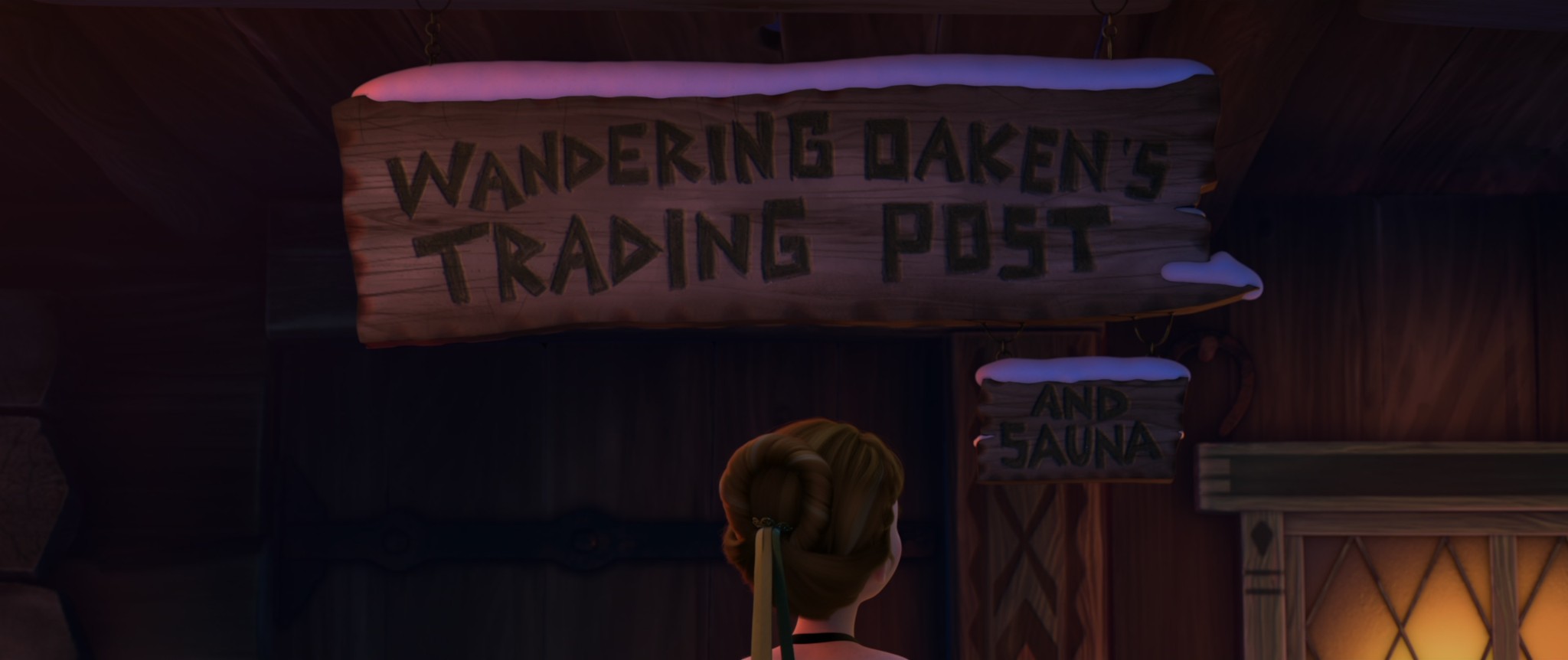
In the films, Oaken runs the Trading Post, earning income by selling goods and services, while Kristoff works as an ice harvester, supplying ice as his livelihood.

More examples can be found in the books. In Dangerous Secrets, Iduna earns money by providing technical advice and blueprints to farmers, allowing her to live independently and pay for her own expenses.
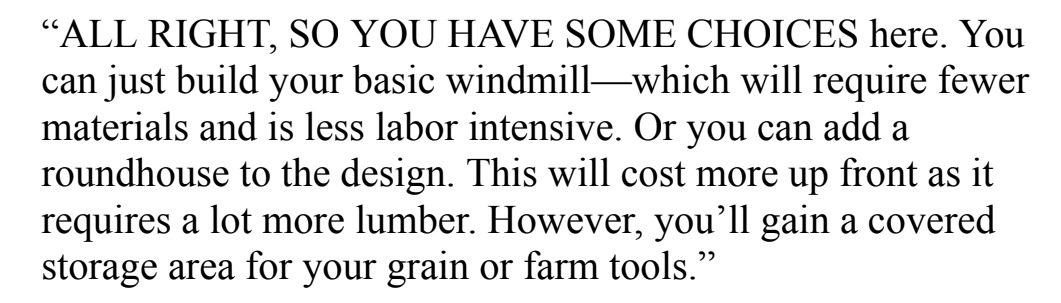
These are just a few examples. Many other occupations and businesses appear throughout the Frozen franchise, all of which have been compiled in the “Citizens of Arendelle”-book, compiled by our Archivist @bigfrozenfan.
While occupations show how citizens earn a living, the franchise also provides interesting details about how businesses in Arendelle operate, promote themselves, and compete with one another.
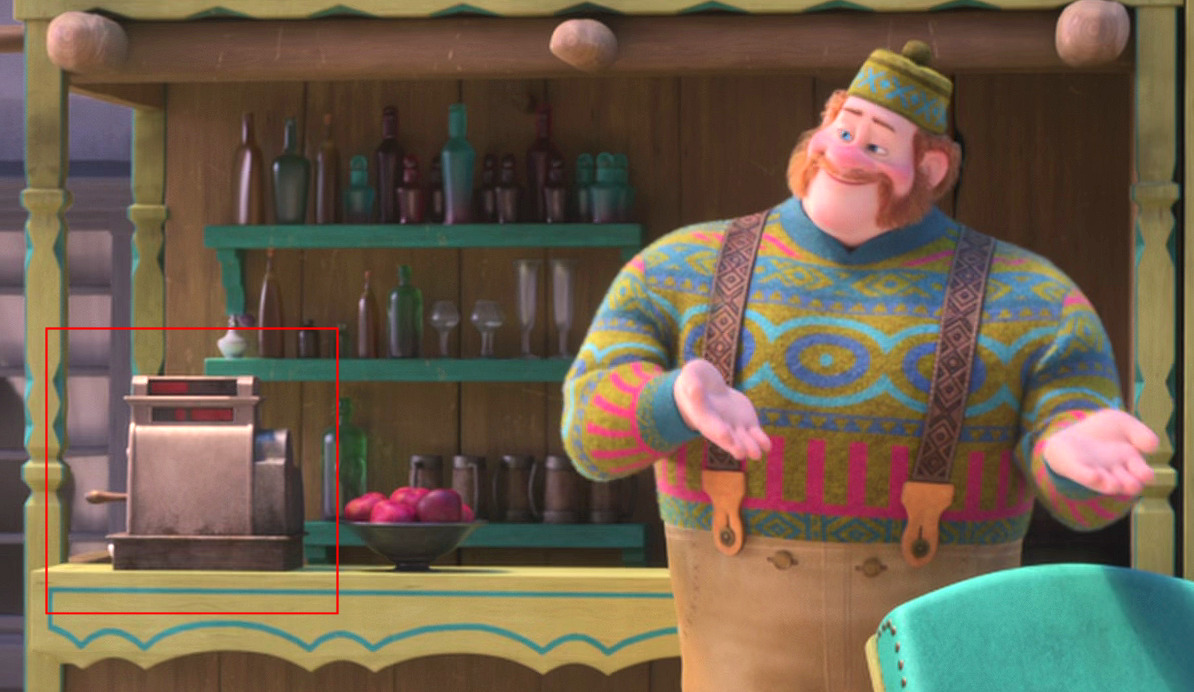
As seen in Frozen 2, Oaken’s market stall in the town square of Arendelle uses a cash register, showing an organized method of handling sales and payments. However, neither Oaken’s shop (Frozen) nor Oaken’s Cloakens and Sauna (Frozen Fever) appears to have a cash register.
We can also see examples of how citizens promote their businesses. In The Fixer Upper, Oaken sponsors a sled for the Polar Nights Ice Harvesting Race, demonstrating that sponsorship can be used to promote a business and increase its visibility within the community.

The same novel also features an example of business competition through a bake-off between two bakeries, suggesting that local businesses in Arendelle compete to attract customers and gain recognition.

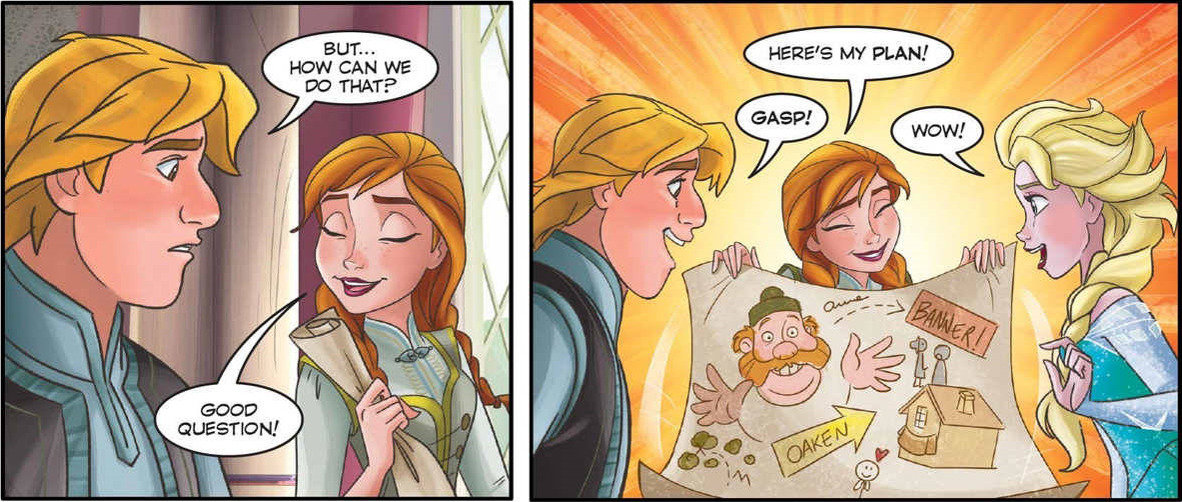
More examples can be found in the comics Incredible Display, Let’s Help Oaken, and Little Inventors, where Anna and Elsa help Oaken and some children promote their inventions and support their businesses.
Retirement
Beyond working and running businesses, the franchise also provides a small glimpse into retirement as part of citizens’ economic lives.
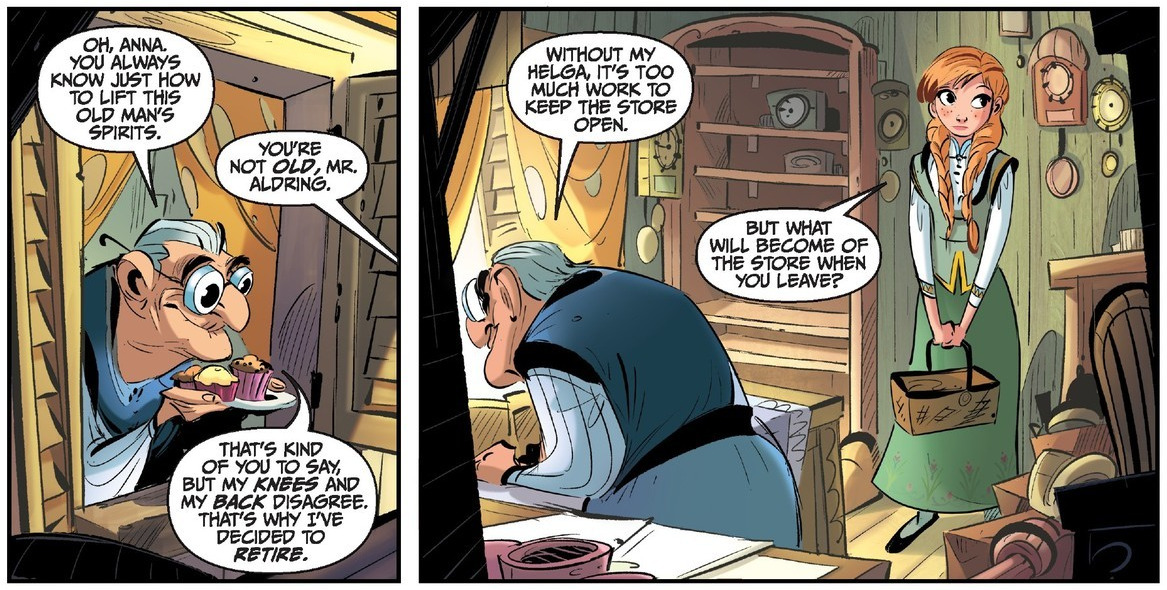
In Breaking Boundaries, a clock maker is preparing to retire from his profession, indicating that retirement is a recognized stage of life within Arendelle’s society.
Royal Economic Influence
The previous sections show how ordinary citizens participate in Arendelle’s economy. However, as a monarchy, the royal family also plays an important role in supporting businesses, providing resources, and creating economic opportunities for its citizens.
Royal Recognition and Opportunities
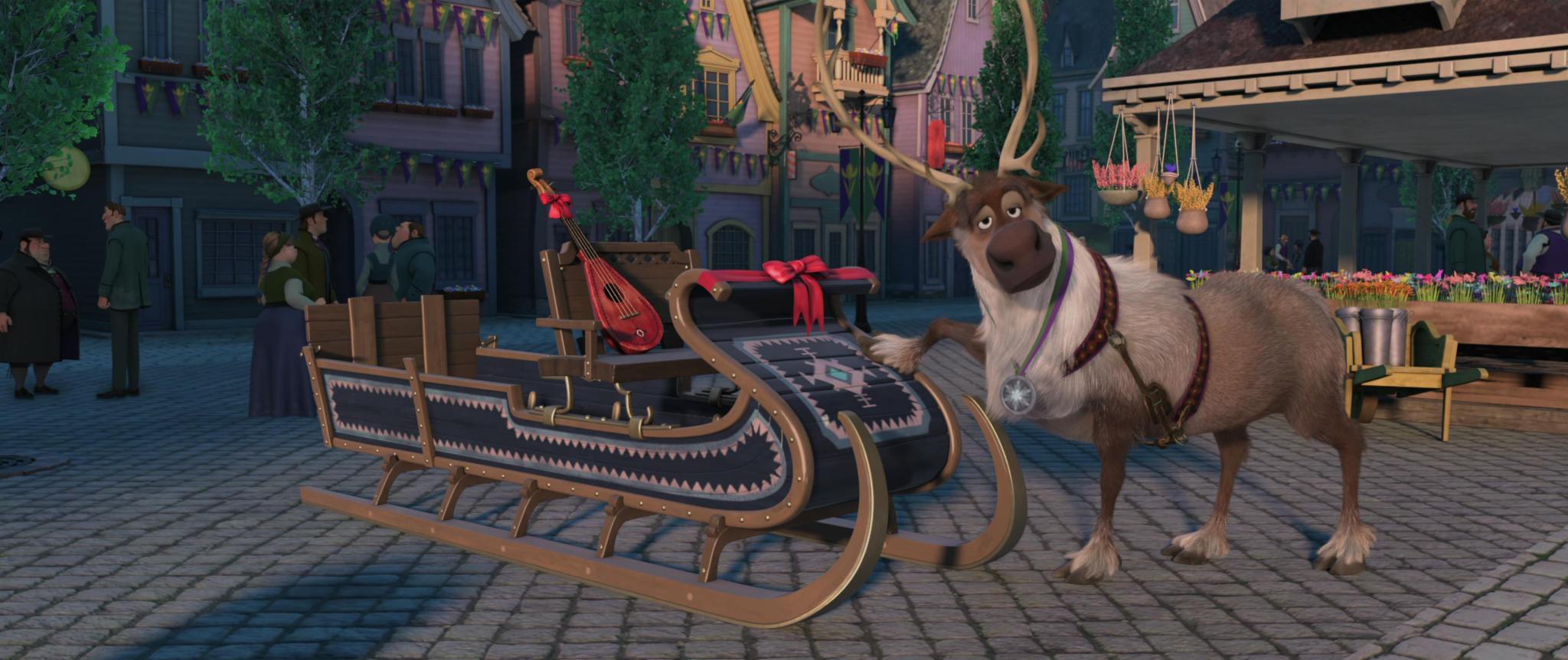
The royal family can also influence citizens’ careers through official recognition. Elsa awarding Kristoff the title of official Arendelle Ice Master and Deliverer (a title that was seemingly made up just for him) gives formal recognition to his occupation and strengthens his role within Arendelle’s economy.
Royal Financial Support
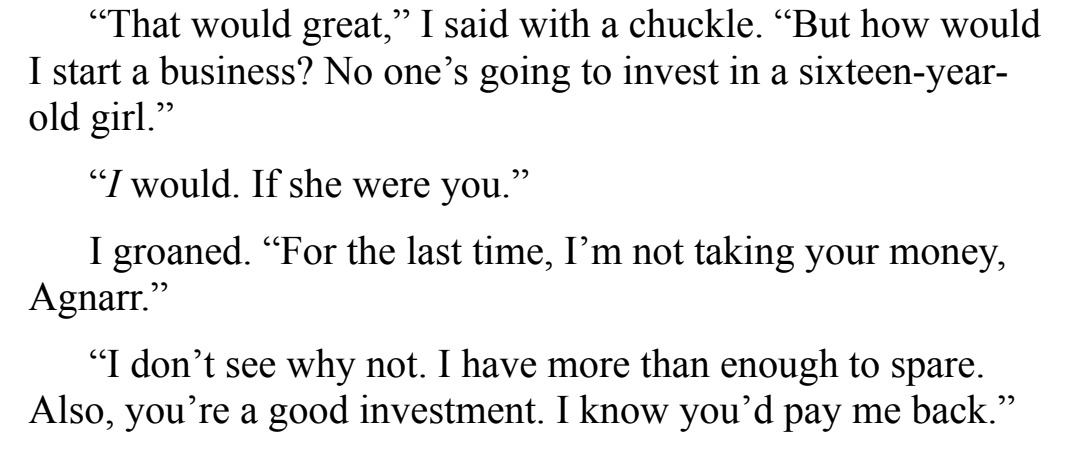
The royal family also appears to have the ability to financially support citizens’ economic activities. In Dangerous Secrets, Agnarr offers to provide financial assistance to Iduna for her windmill business.
Royal Services and Resources
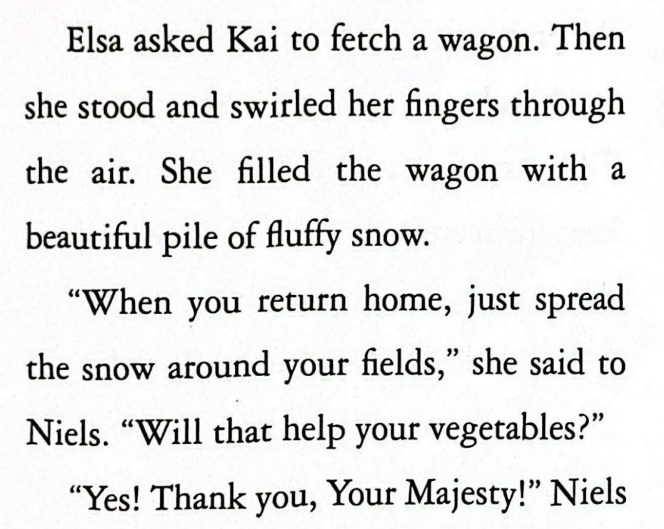
Elsa’s magical abilities also provide unique resources that can benefit the citizens of Arendelle. In Anna & Elsa #1: All Hail the Queen, she uses her ice magic to create useful items, such as ice boxes and piles of fluffy snow to help preserve crops.
Conclusion
Although the Frozen franchise does not provide a complete explanation of Arendelle’s economy, the details found throughout the films, books, and comics reveal a kingdom with its own system of currency, trade, work, and business activities. These small details help create a more complete picture of Arendelle as a living society beyond what is shown on screen.
Big thanks to the Archivists here @virtual-winter (special thanks for your incredible help!) @frozenheart46 @bigfrozenfan @theartoffrozen & @dgzy117 for their help and for sharing valuable information that contributed to this article!
/snowflaketale12